Real woodworking, from one car garage.
A plain-English reference library for beginner woodworking in a small Ontario garage — where the shop shares its space with a car, the lumber comes from the big-box store or the local yard, and January nights drop below −20 °C. How to set up the space, the tools that actually earn their keep, the joints and finishes that work the first time, and how to keep making things when the shop is cold enough to show your breath.
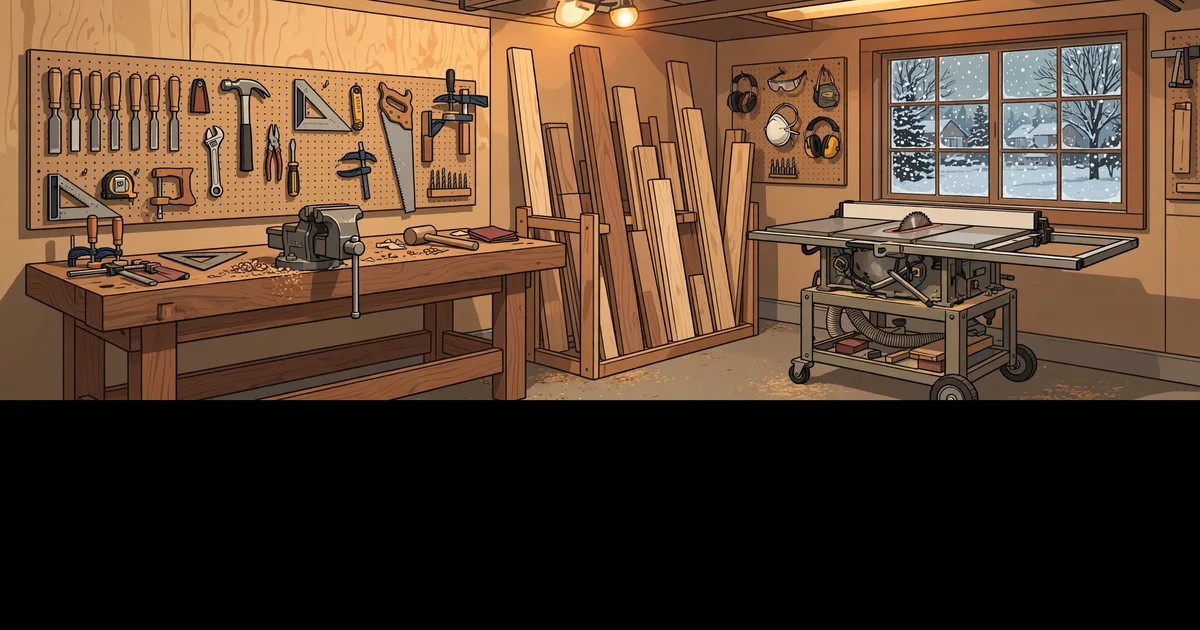
- 7 guides in this first batch
- 1 car still parks in this shop
- 10 tools in the starter kit
- −30 °C January nights, planned for
In the shop this month — October
- Move glue and finishes indoors before the first hard freeze — a frozen glue bottle never recovers. See the winter guide
- Paste-wax the cast iron now, before condensation season starts on cold tool tops.
- Use the fall glue-up weather — cool, dry October afternoons are the best of the year to start the bench. See the workbench guide
- Check your safety gear — dust mask fit, ear muffs, eye protection — and replace whatever’s worn. See the tool kit
- Acclimate winter-project lumber in the shop for at least a week before you cut it. See the lumber guide
Find a guide
Search by topic, tool, or problem — try “workbench”, “pocket hole”, “board feet”, or “glue”.
Showing all 7 guides in the first batch.
The first batch
Seven guides covering the questions every small-shop beginner asks first.
garage
A one-car garage is about 10 by 20 feet (3 by 6 m) — enough for a real workshop, if the shop is designed to disappear. Benches and tools on wheels, storage on the walls and ceiling, and a layout that returns to “car parks here” in about ten minutes.
Shop SetupOne weekend to set upFirstbench
A workbench is the first real tool in the shop — everything gets built, held, and flattened on it. What actually makes a bench work (height, a flat top, mass, a good vise), and a simple, sturdy plan a beginner can build in a weekend from construction lumber.
ProjectsA weekend build10tools
Ten tools, bought in the right order, will build almost every beginner project — boxes, shelves, benches, small furniture. The list, what each one earns you, the safety gear that comes before all of them, and the expensive machines to skip until the shop tells you otherwise.
ToolsBuild the kit over a few monthsBoardfeet
Lumber is sold in a language of its own: a 2×4 that isn’t, boards priced by the board foot, stamps full of codes. How Ontario lumber is actually sized, graded, and priced — and how to pick straight boards and bring home the right amount.
Shop SetupOne careful trip to the yardPocketholes
Pocket holes are the fastest way for a beginner to build things that stay together: face frames, shop cabinets, utility furniture. When the joint is the right choice, how to set the jig, which screws to use for which thickness — and the four failures everybody hits exactly once.
JoineryAn evening to learnSand &finish
Sanding is where projects go to look homemade or handmade — and the finish decides which. The grit sequence that actually matters, dust control between coats, and four forgiving finishes explained honestly: what each protects against, and how long each really takes to cure.
FinishingMostly waiting on cure times−20 °Cshop
An unheated Ontario garage spends months below the temperature where glue cures and finishes behave. The winter rules: glue and finishes live indoors, warm the work instead of the room, keep condensation off the cast iron — and use the cold months for the jobs they’re good for.
WinterAll winter, in short warm sessionsHow every guide is built
One formula, followed the same way on every page.
What & why
The job explained plainly, with the reasoning that decides whether it works.
Steps, in order
The method in sequence, from setup to finish — nothing skipped, nothing out of order.
Beginner mistakes
The ways the job usually goes wrong the first time, so you can skip them.
Good to know
The one insight that separates fighting your shop from working with it — plus stop-and-think safety boxes wherever a blade, bit, or chemical is involved.
The shop rules
Every guide on this site works within these rules:
- PPE is step zero. Eye protection, hearing protection, and dust protection go on before the tool starts — routers and vacuums are louder, and finish-sanding dust is finer, than beginners expect.
- Guards stay on. If a cut seems to need the guard off, that’s the sign to find another way to make the cut.
- Unplug before you adjust. Blade, bit, and belt changes happen with the tool unplugged or the battery out — every time, including the “quick” ones.
- Glue has a temperature. Below about 10 °C, PVA wood glue won’t cure properly, and a frozen bottle is ruined. Glue and finishes live indoors in an Ontario winter.